
Augusta Previous Residents Sources
No single roll lists every person tied to an Augusta address. Start with the source closest to the time in question. A current parcel card and recent deed establish the modern title path. Clerk books extend that path before the online index. Directories, census schedules, and newspapers shift the focus from ownership to occupancy. Sanborn maps and permit records describe the building, not the people, but they help explain why a household appears, disappears, or uses a changed number.
| Augusta Source | Time Span | Record Keeper | Evidence Found |
|---|---|---|---|
| GSCCCA deed index | January 1, 1990 to present | GSCCCA and Richmond Clerk | Parties, instruments, dates, book/page |
| Clerk deed books | Before 1990 | Richmond Clerk | Earlier transfers, plats, land descriptions |
| City directories | 1841 to present, with gaps | Georgia Heritage Room and Reese Library | Names, addresses, occupations |
| Federal census | Local microfilm 1820 to 1930; public schedules through 1950 | Georgia Heritage Room and NARA | Households on census day |
| Sanborn maps | 1884 to 1923; revised 1954, 1965, 1970 holdings | UGA, DLG, and LOC | Building form, use, material, street context |
| Permits and code files | Modern, start date not published | Planning & Development | Work, applicant, contractor, date, status |
For a recent transfer, begin with Augusta Maps and the real-estate index. For a person known only from an old address, use the nearest directory year, then confirm the match in a census, deed, or newspaper.
Start Augusta Address History Today
The present parcel card supplies a stable parcel number and legal land description. Search by street address, click the parcel, and copy the owner's indexed name exactly. Record the situs address, which is the physical property address, separately from the owner's mailing address. Tax mail can go to an owner who lives elsewhere, so it does not prove current occupancy.
Capture the subdivision, block, lot, acreage, sale date, and deed book/page when shown. Homestead status may support owner occupancy, but it does not identify all household members. The card's best role is to point to the recorded deed and keep the Augusta land identity steady as names and street labels change.
Note: Save the parcel number and legal description first, since both identify Augusta land more reliably than a personal name alone.
Walk Richmond Deeds Backward
Richmond County's deed custodian is the Clerk of Superior Court. In the GSCCCA Real Estate search, a grantor transfers an interest and a grantee receives it. Use the current owner's acquisition deed as the first link, then turn the seller into the next search name. Match the same land description at every step.
- Copy the current owner, parcel ID, legal description, and acquisition book/page from the parcel card.
- Search the owner as grantee in Richmond County. Note the grantor, instrument, filed date, and cross-reference.
- Search that grantor as a grantee. Compare subdivision, block, lot, or metes-and-bounds wording before accepting the result.
- Repeat to the January 1, 1990 cutoff. Try name variants, trusts, estates, and initials when a link goes missing.
- Continue through courthouse indexes, deed books, and plats. Obtain a certified copy when formal proof is needed.
- Grantor and grantee
- The grantor gives an interest; the grantee receives it.
- Chain of title
- The linked series of recorded transfers for one parcel.
- Legal description
- The deed's land wording, often a lot or measured boundary, that can survive address changes.
- Security deed
- A financing instrument, not automatic proof of a sale or new resident.
An index screen is not the deed. A plat identifies land rather than occupants, and quitclaim wording alone does not prove a normal sale.
Augusta Records Before 1990
The online Richmond index reports coverage from January 1, 1990. Earlier previous residents work moves to courthouse books and the public terminal. Search the grantor and grantee indexes for a book/page, then inspect the instrument and any cited plat. The Richmond County Clerk can explain access and copy options.
This divide is useful: online deeds reach 1990, while Augusta directories reach the nineteenth century. The systems meet through a legal description, book/page, or name tied to the same parcel. If a transfer hides under an estate, company, former surname, or misspelling, search both parties and widen the dates. A PT-61 record can add transfer context, though some search modes require paid access.
Sanborn Maps Date Augusta Changes
Deeds track title, but not always when a building gained a rear unit, changed use, or was rebuilt. Augusta's Sanborn fire-insurance maps include 1884, 1890, 1904, 1917, 1920, and 1923 editions, plus later holdings based on 1954 sheets revised in 1965 and 1970. Compare street number, footprint, material, stories, use, and outbuildings.
Later sheets can contain pasted revisions, so one may reflect a span rather than one clean date. A Sanborn map names no previous residents. It supplies physical context that a directory or census can connect to people.
The 1916 Great Augusta Fire makes this method especially strong downtown. The 1917 map records fireproof rebuilding, and fire department ledgers digitized in 2024 add incident detail. Together they can explain a break that deeds leave unclear.
Open the UGA Augusta Sanborn collection before comparing map years.
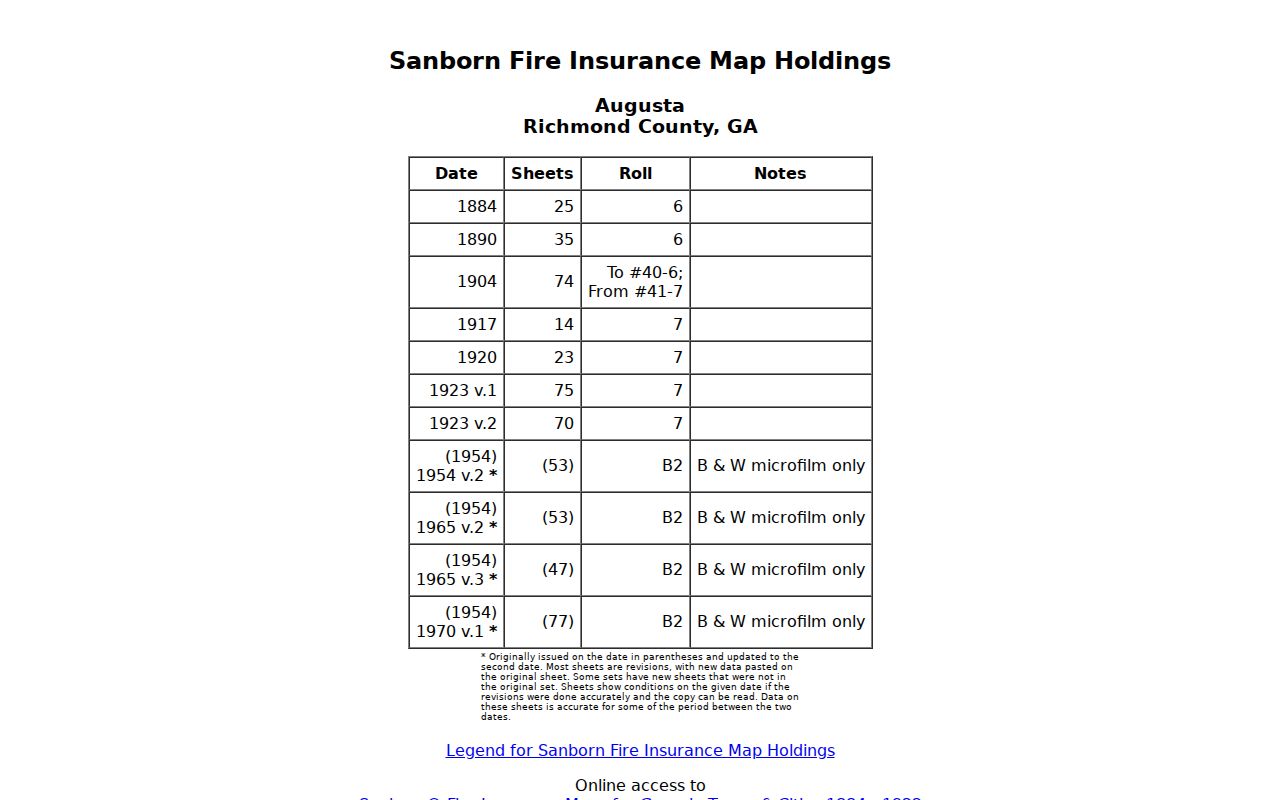
The collection identifies the available editions for a structure-by-structure Augusta comparison.
Keep Augusta Land Descriptions
Street numbers are fragile evidence. No official Augusta renumbering table was found, so a broken address should not be repaired with a guessed date. Carry the subdivision and lot, or the metes-and-bounds wording, through every deed. Compare plats, directory street sections, and Sanborn sheets one volume at a time.
This separates a move from a number change, lot split, annexation, or publisher choice. Augusta Maps includes Old City Limits and municipal-boundary layers, which may explain why an older city record omits land now using an Augusta mailing label. Preserve spelling and suffixes in a worksheet so same-name conflicts remain visible.
Address tip. Treat the legal description as the thread through time; use the street address as a finding aid, not final proof.
Augusta Past Residents by Household
Owners are only half of a house story. Directory address sections, reverse telephone runs where present, and census schedules can identify occupants who never held title. The Georgia Heritage Room holds Augusta directories from 1841 to the present with gaps. The detailed shelf is covered on the Augusta city directory page.
- Choose the directory edition nearest a deed, permit, death, or newspaper date.
- Record the edition, page, full name, occupation, spouse notation, address, and abbreviation key.
- Check one year before and after a move. Missing issues and delayed canvassing can create a false break.
- Pair the directory with the nearest public census. Browse nearby households if street numbers are unclear.
- Do not project a 1950 household into later years without a fresh directory, deed, newspaper, or probate link.
A criss-cross directory is arranged by address or phone instead of surname. An enumeration district is the small census-taker area. Both can recover a household when spelling defeats a name search. Public population schedules currently end with 1950 under the 72-year release rule.
The Georgia Heritage Room charges $5 for a remote check of one name across one to five directory years. Materials do not circulate, but visitors may take notes and photographs.
Augusta Permits Mark Property Change
Planning and code records add dated work to an address trail. Augusta Planning & Development may hold the site address, applicant, contractor, work description, dates, and status. Code Enforcement may add a violation type or case status, with sensitive complainant details redacted. The research did not state an online starting year, so older availability must be asked of the department.
A permit does not prove the applicant lived there. It can place a remodel, addition, demolition, or use change between two household sources. Link the date to the same parcel, then compare it with the Sanborn footprint, deed transfer, and directory occupants.
Note: Ask Planning & Development for address-based access when the online record omits the needed year.
Close Augusta Resident Trails
An obituary, funeral program, cemetery index, or probate file can explain why a person leaves the record. The Georgia Heritage Room offers the Augusta Chronicle from 1792 to the present for eligible cardholders, an Elliott Funeral Home Index, cemetery sources, and more than 1,000 digitized African American funeral programs from 1933 through 2008.
Search a notice for relatives, former addresses, and a date, then treat it as a pointer rather than a certificate. Richmond Probate Court handles wills, estates, and administrators. A file may name heirs, while a later administrator's deed reconnects the estate to the parcel. Death records have eligibility rules, so use the Georgia death-record channel only when authorized.
Review National Archives census research before searching public schedules.
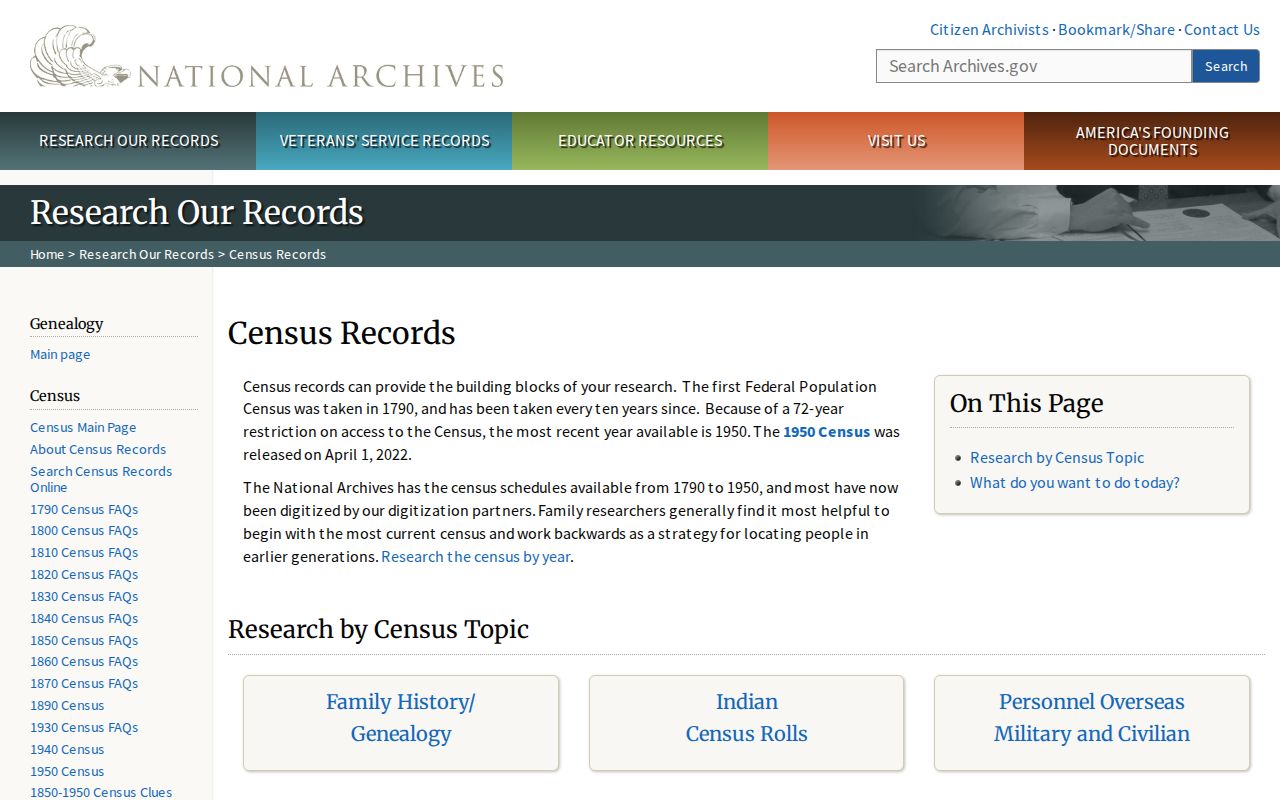
The federal guidance helps place an Augusta household in the correct released census and enumeration area.
Lawful use. Research Augusta previous residents for house history, genealogy, estates, or personal curiosity. Never use a past address trail to track, harass, or harm a living person.